From Apprentice to Award-Winner: Lucy Kedian on Public Health Engineering and Finding Your Path
In the wake of National Apprenticeship Week 2026, and with our Apprenticeship Scheme now open for a new cohort, we sat down with Lucy Kedian, Graduate Public Health Engineer and winner of the CIBSE ‘Apprentice of the Year’ 2025 (Level 3–4) award.
From starting out as an apprentice to working on major live projects, Lucy’s journey highlights the value of hands-on experience, the importance of public health engineering, and why the built environment offers exciting opportunities for the next generation, especially for women considering a career within engineering.
What first drew you to building services engineering – and why Public Health?
I was really interested in the idea that the systems you don’t see are often the ones that matter most. Behind every comfortable, functional building, there’s a team making sure water flows safely, drainage works properly, and everything operates as it should – without people even noticing it.
Public Health stood out to me because it’s so fundamental. You’re designing systems that protect people, support hygiene, and make buildings safe to use every day. You’re making a real difference, even if it’s behind the scenes.
Public Health is often described as the ‘hidden’ part of MEP. Why is it so important?
It’s essential to how a building works. Public Health engineering is all about managing water safely and efficiently, from drinking water systems to drainage and rainwater. A good design helps prevent contamination, reduces water waste, and protects both the people using the building and the environment around it. It’s something every building relies on, even if most people don’t think about it.
There’s also a growing sustainability aspect. As the industry moves towards more responsible resource use, water is becoming just as important as energy. Designing systems that reduce consumption or reuse water is becoming a really key part of what we do.
You chose an apprenticeship route instead of university – how has that shaped your development?
Choosing an apprenticeship has helped me grow in ways I don’t think I would have otherwise. You’re learning while working on real projects, which builds your confidence really quickly. I’ve had to pick up new software, contribute in meetings, and solve real design challenges. There have been times where I’ve been the only person working on a specific part of a project, which pushes you to speak up and take ownership.
You’re not just learning theory, you’re applying it straight away – and that’s been a huge benefit for me, both technically and personally.
What’s great is that it doesn’t limit your options either. I’m actually starting university this summer as the next step in my apprenticeship journey, so I’ll continue building on that practical experience alongside my studies. For me, it’s the best of both worlds. You gain real industry experience early on, you’re earning while you learn, and developing skills you can apply immediately. Financially, it can also be a smarter long-term choice, as you’re building experience and avoiding some of the debt that often comes with more traditional academic routes.
Can you share a moment or project that made you think, ‘this is why I chose this career’?
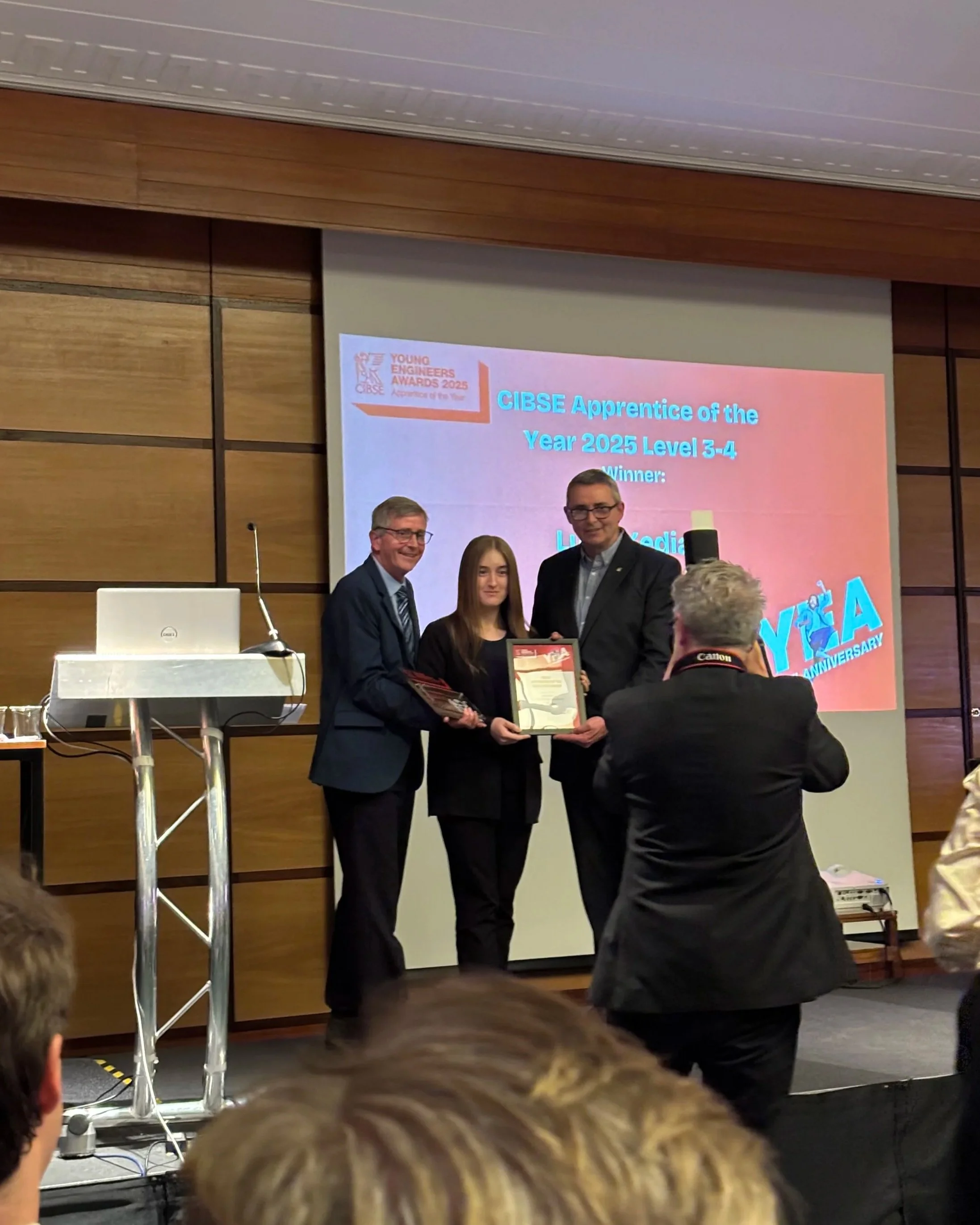
Winning ‘Apprentice of the Year’ last year at the CIBSE YEN Awards, was a big moment for me. It made me realise that I’m genuinely good at what I do, and that the work I’ve been putting in is making an impact. But being involved in live projects has also been a highlight. Working on large-scale developments like One East side in Birmingham has been an incredible experience. You’re part of a wider team, seeing how designs come together on site, and understanding how your work fits into the bigger picture. That’s when it really clicks – when you’re not only learning but contributing to something real.
What’s it like coming into a traditionally male-dominated industry as a young woman?
My experience has been really positive. Throughout my journey I’ve felt supported and encouraged from the start, and I’ve definitely noticed more women coming into the industry, which is great to see! In my experience, people focus on your work and your ability, not your gender, I’ve always felt like part of the team.
To any young women considering engineering, I’d say: if you’re curious, creative, and enjoy problem-solving, it’s a career path definitely worth exploring. There’s so much opportunity, and the industry is evolving all the time.
For someone considering a career in the built environment, where should they start?
When I first started, I never imagined I’d end up winning an award – so my advice would be not to overthink it and just take that first step. Try to get some work experience if you can, CPW offer summer internships and work experience programmes, so you can see what day-to-day life is like. Attending careers fairs is also a good option, speak to companies and explore different apprenticeship opportunities. Don’t be afraid to ask questions, it’s the best way to learn – there’s no such thing as a silly question, especially when you’re starting out.
Ready to start your career in engineering, sustainability or the built environment? Our Apprenticeship Programme is now open for applications. Apply here and take your first step towards a future with CPW.