The Barnsley College Institute of Technology
Client: Barnsley College University Centre
Our Approach
The brief
The £16m South Yorkshire Institute of Technology at Barnsley College has transformed a 93-year-old art deco former Mining and Technical College into a future-ready centre of innovation and higher technical education for South Yorkshire.
Located on Church Street in Barnsley town centre, the 1,795m² building was originally constructed in 1932 and has been in continuous educational use ever since. As the oldest building in the College’s estate, it held significant architectural and civic value, but suffered from ageing fabric, inefficient gas heating, poor thermal performance and infrastructure that no longer met the demands of modern technical learning.
As part of the Department for Education backed South Yorkshire Institute of Technology programme, one of just 21 IoTs nationally, Barnsley College required a flagship facility capable of supporting advanced engineering, construction and digital education, while aligning with Barnsley Council’s ambitious Zero 45 decarbonisation target.
CPW were appointed to deliver MEP and decarbonisation design as part of a collaborative team including Race Cottam Architects, Adept, AECOM, Edge Consultants and G F Tomlinson. The brief demanded a sensitive regeneration that preserved the building’s historic character, radically improved energy performance and created flexible, technology-rich learning environments.
A heritage‑sensitive approach
A fabric‑first, heritage-sensitive strategy underpinned the project from Stage 1. Given the age and construction of the building, reducing heat loss and improving airtightness were critical to unlocking long‑term operational efficiency and allowing a transition away from fossil fuels.
CPW developed detailed IES dynamic simulation models, and BRUKL assessments to understand baseline performance and test retrofit scenarios. These studies informed a successful Salix Public Sector Decarbonisation Scheme (PSDS) bid and shaped a phased strategy that prioritised fabric improvements before introducing low carbon services.
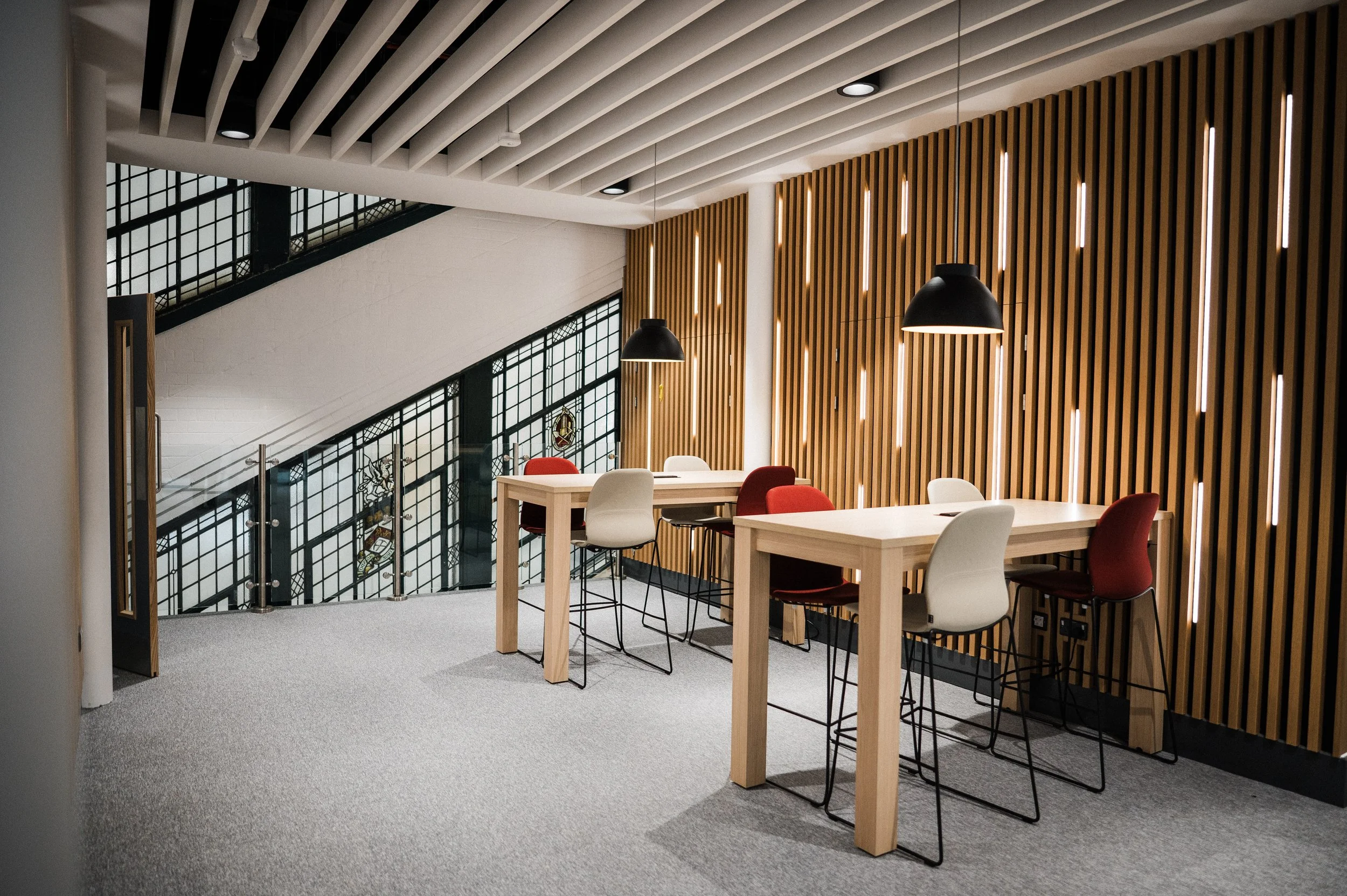
Key fabric interventions included extensive roof insulation, secondary glazing to all external windows and 3,238m² of insulated dry lining to internal walls. These measures dramatically reduced thermal losses while respecting the original art deco façade and architectural detailing.
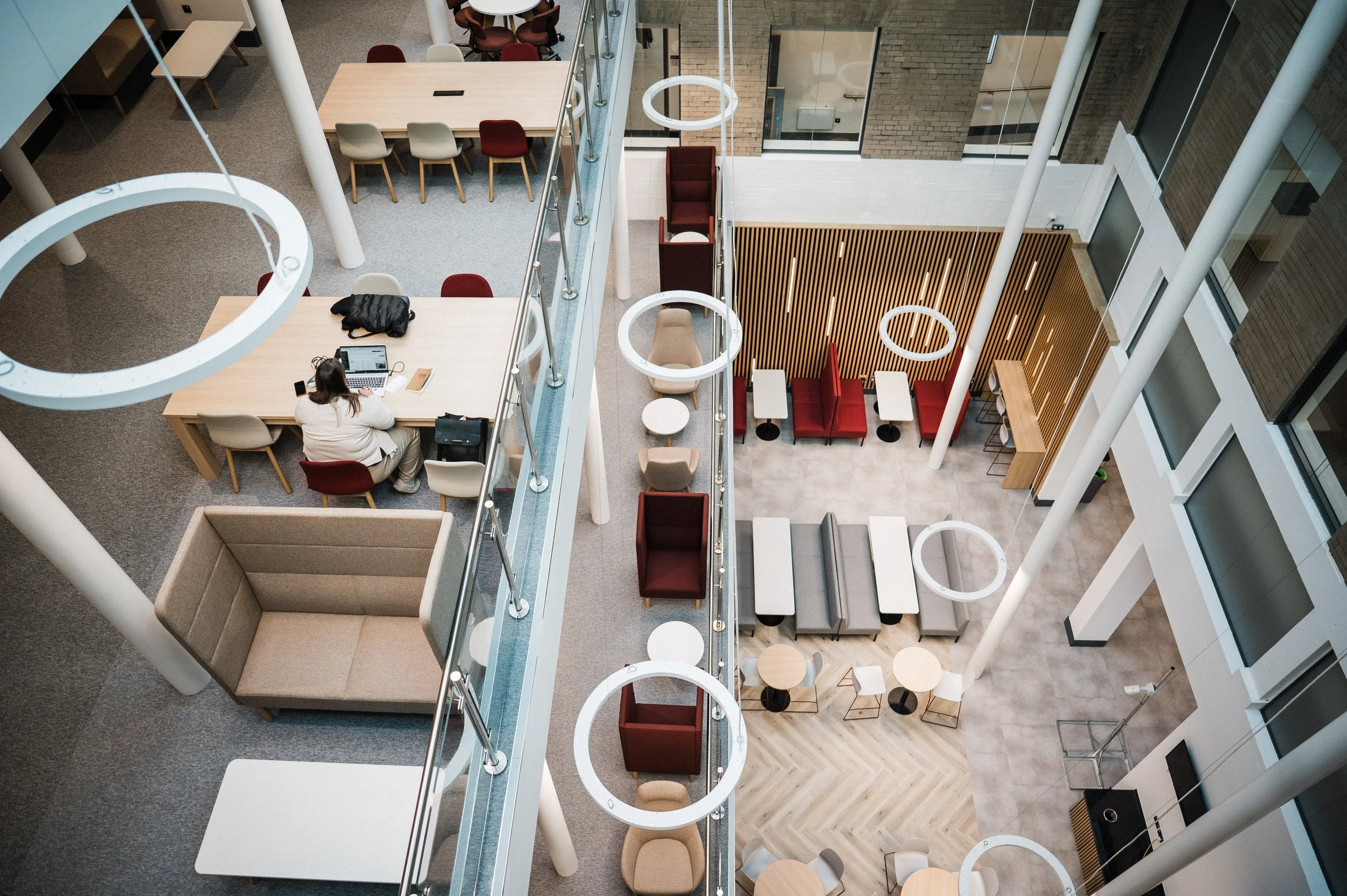
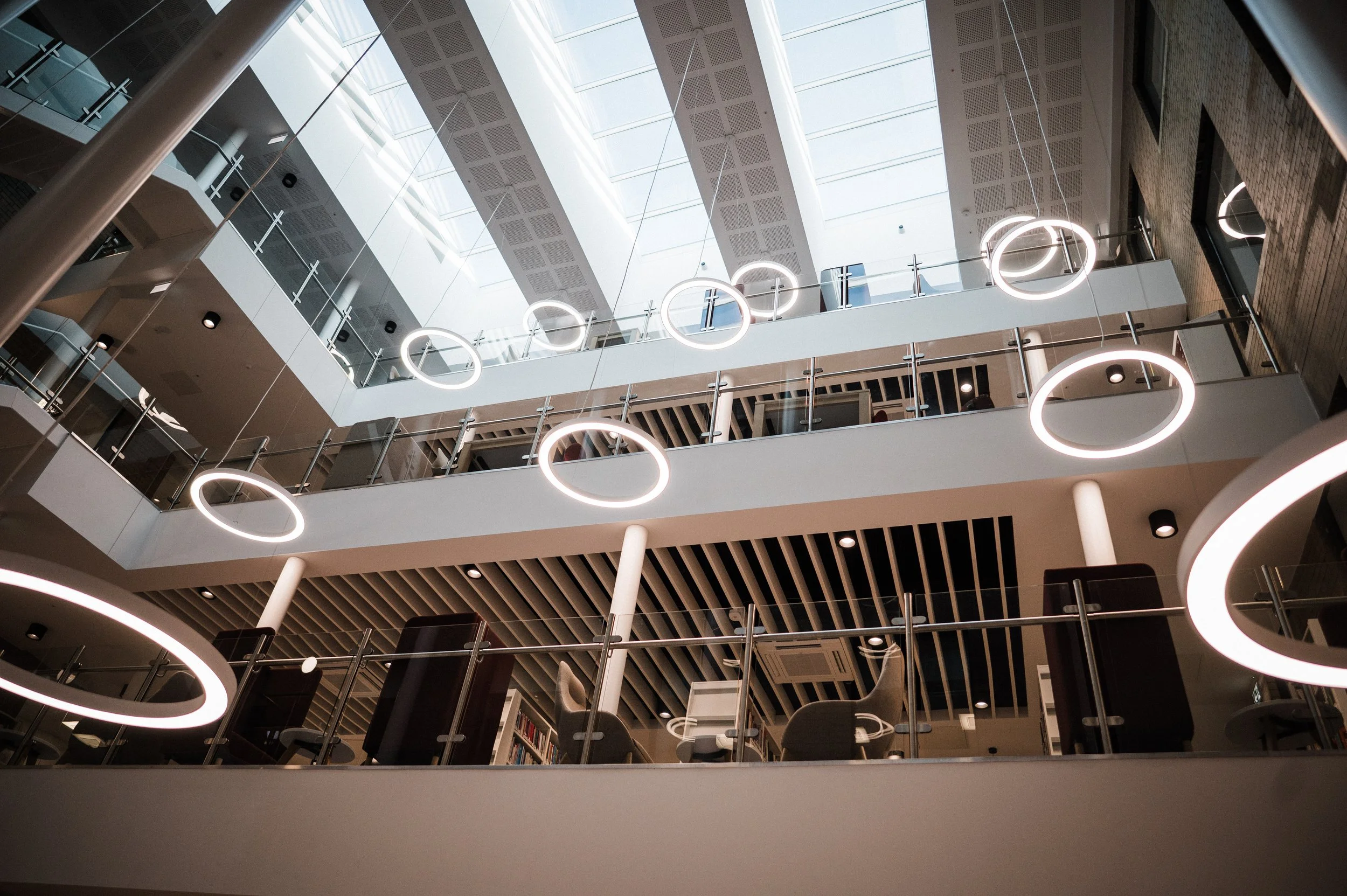
The architects developed a design that carefully balanced conservation with transformation. The most significant intervention was the creation of a new enclosed atrium, formed by repurposing the former open courtyard. A new glazed roof was installed above three newly inserted mezzanine floors, creating a bright, accessible learning resource centre and social hub at the heart of the building.
Structural upgrades enabled the introduction of new mezzanine levels and rooftop plant without compromising the historic fabric, while sensitive construction techniques protected retained features throughout the refurbishment.
Low carbon technologies
With fabric performance enhanced, the project transitioned the building to an all‑electric strategy, replacing ageing gas systems with modern, efficient technologies.
A VRF heat pump system now provides heating and cooling throughout the building, offering precise zonal control and improved comfort for students and staff. Two new air handling units were installed, alongside the refurbishment of two existing units, significantly improving ventilation efficiency and indoor air quality.
Renewable energy generation plays a key role in reducing operational carbon. A 100‑panel roof‑mounted photovoltaic array delivers up to 29.73 kWp, reducing reliance on grid electricity and supporting the College’s decarbonisation ambitions. A new electrical substation was also installed, providing the increased capacity required for specialist equipment and enabling export of surplus solar energy.
LED lighting and point‑of‑use electric hot water systems further reduce energy demand and improve operational safety. Together, these interventions have transformed the performance of the building, achieving an EPC A rating – an exceptional outcome for a 1930s heritage retrofit.
Close collaboration
Delivering such a complex regeneration within a constrained town‑centre site and a live educational campus required close collaboration, robust coordination and careful sequencing.
Extensive 3D coordination between architecture, structure and MEP disciplines enabled new services to be threaded through restricted ceiling voids and legacy layouts without impacting heritage elements. Where intrusive surveys uncovered unknown structural conditions and legacy services, the team worked collaboratively to resolve issues sensitively and efficiently.
The completed Institute of Technology is now one of Barnsley College’s most sustainable and inspiring buildings. A once thermally inefficient 1930s structure has been reimagined as a landmark low‑carbon education facility, supporting regional skills development and economic growth.
The new atrium and mezzanines provide bright, engaging spaces that improve accessibility, wayfinding and social interaction, while specialist IoT facilities offer high‑quality environments for advanced technical learning. Feedback from students and staff highlights improved comfort, usability and pride in the revitalised building.
As a flagship hub within the South Yorkshire Institute of Technology, the project “opens doors to opportunity, aspiration and achievement” for learners across the region, while providing a replicable blueprint for future FE estate decarbonisation and regeneration.
Key stats:
South Yorkshire Insider Property Awards 2026 ‘Heritage Project of the Year’ winner
Construction Excellence Yorkshire Awards 2026 ‘Retrofit of the Year’ winner
LABC Building Excellence Awards 2026 ‘Best Non-Residential Extension, Alteration or Conversion’ winner
£16m regeneration and refurbishment project
1,795m² higher education facility
EPC A rating achieved through low carbon retrofit
100 roof‑mounted PV panels (29.73 kWp)
Want to find out how we could support your project? Visit our services page.