ARU Peterborough
Client: Cambridge and Peterborough Combined Authority / Anglia Ruskin University
The brief
The vision for ARU Peterborough was to create a high-quality, ambitious university campus on the Embankment, establishing a “University Quarter” that would not only deliver education and research but also provide a welcoming, stimulating, and sustainable innovation ecosystem. In late 2021, a project team was appointed to prepare an Outline Planning Application (OPA) to set out a development framework for the campus’s long-term expansion. This approach was chosen to masterplan the wider campus rather than pursue a piecemeal, phase-by-phase development. The masterplan was a direct response to the vision outlined in the adopted Local Plan, which aimed to establish a campus-based university with a projected student population of 12,500.
Our role as MEP and sustainability consultants was to appraise and integrate key infrastructure strategies into the masterplan. The project’s vision was clear: the campus needed to demonstrate authentic sustainability credentials and target carbon neutrality by 2045, including Scope 3 emissions.
Energy and Infrastructure
Energy Strategy:
A core task was to develop an energy strategy that was scalable, resilient, and fossil fuel-free. We were tasked with considering a district heating system, which aligns with the Peterborough Integrated Renewables Infrastructure (PIRI) project, a new heat network emanating from the energy-from-waste plant.
Heat Pump Solutions:
The masterplan feasibility included a specific appraisal of potential heat pump solutions. We explored the possibility of using the River Nene and other ground sources for heat pump applications, assessing the technical feasibility and sustainability benefits of these solutions.
Appraising Infrastructure:
We also had to consider the wider infrastructure context. The local electrical distribution network (DNO) was found to be at capacity in the area, which meant that any future development would likely require costly reinforcements. We recommended early engagement with the DNO to develop a long-term solution and understand the costs and programme implications for future phases.
This holistic approach ensured that sustainability and a robust, low-carbon energy strategy were not afterthoughts but were fundamental to the masterplan from the very beginning. This allowed for an innovative and adaptable framework that will support the university's growth and its long-term environmental aspirations.
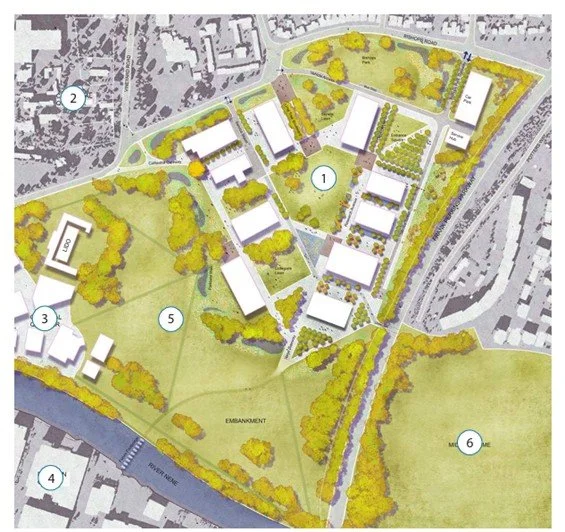
ARU Peterborough Campus Masterplan
Phase 1 // University House
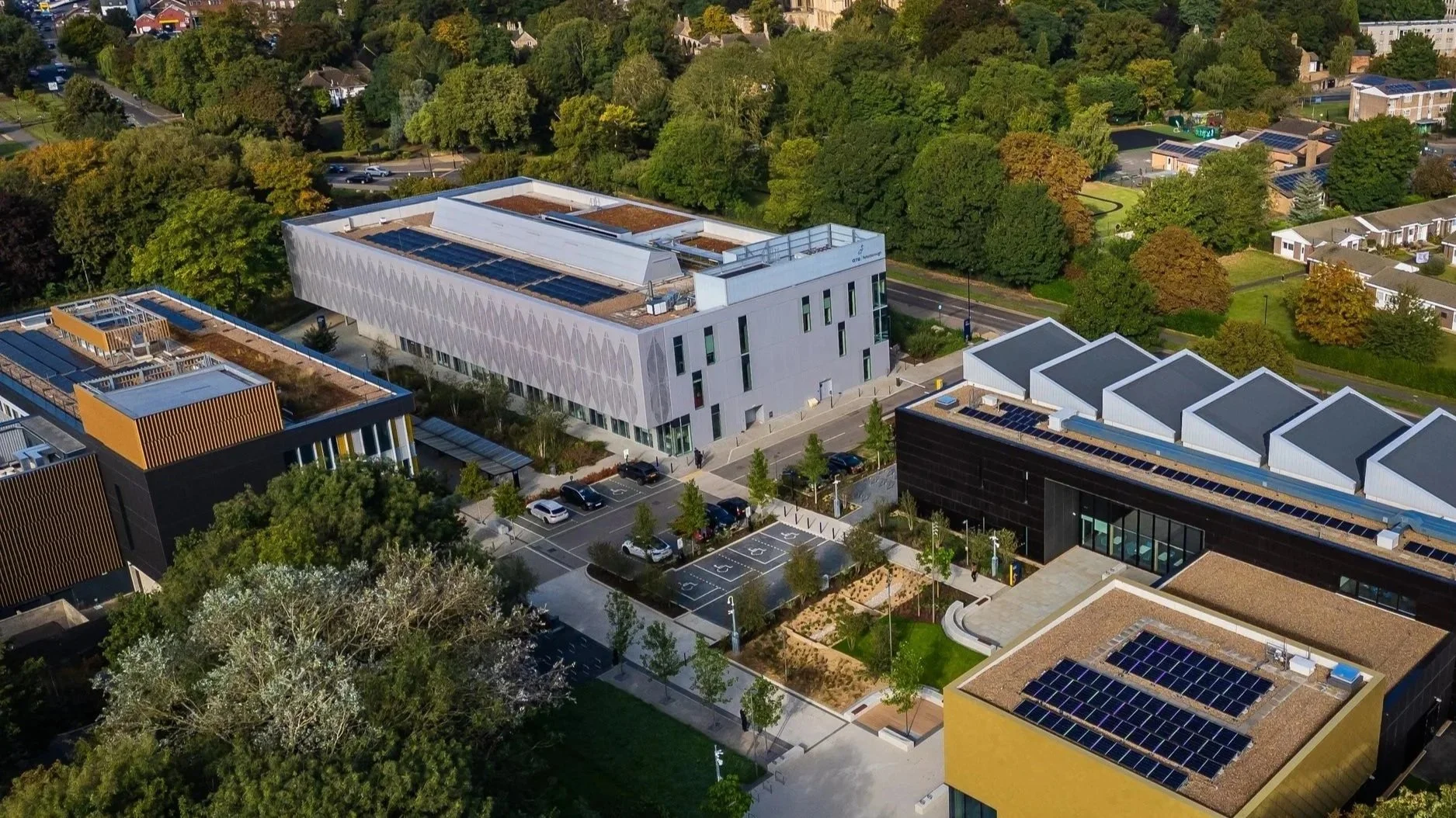
Phase 2 // Innovation and Research Centre
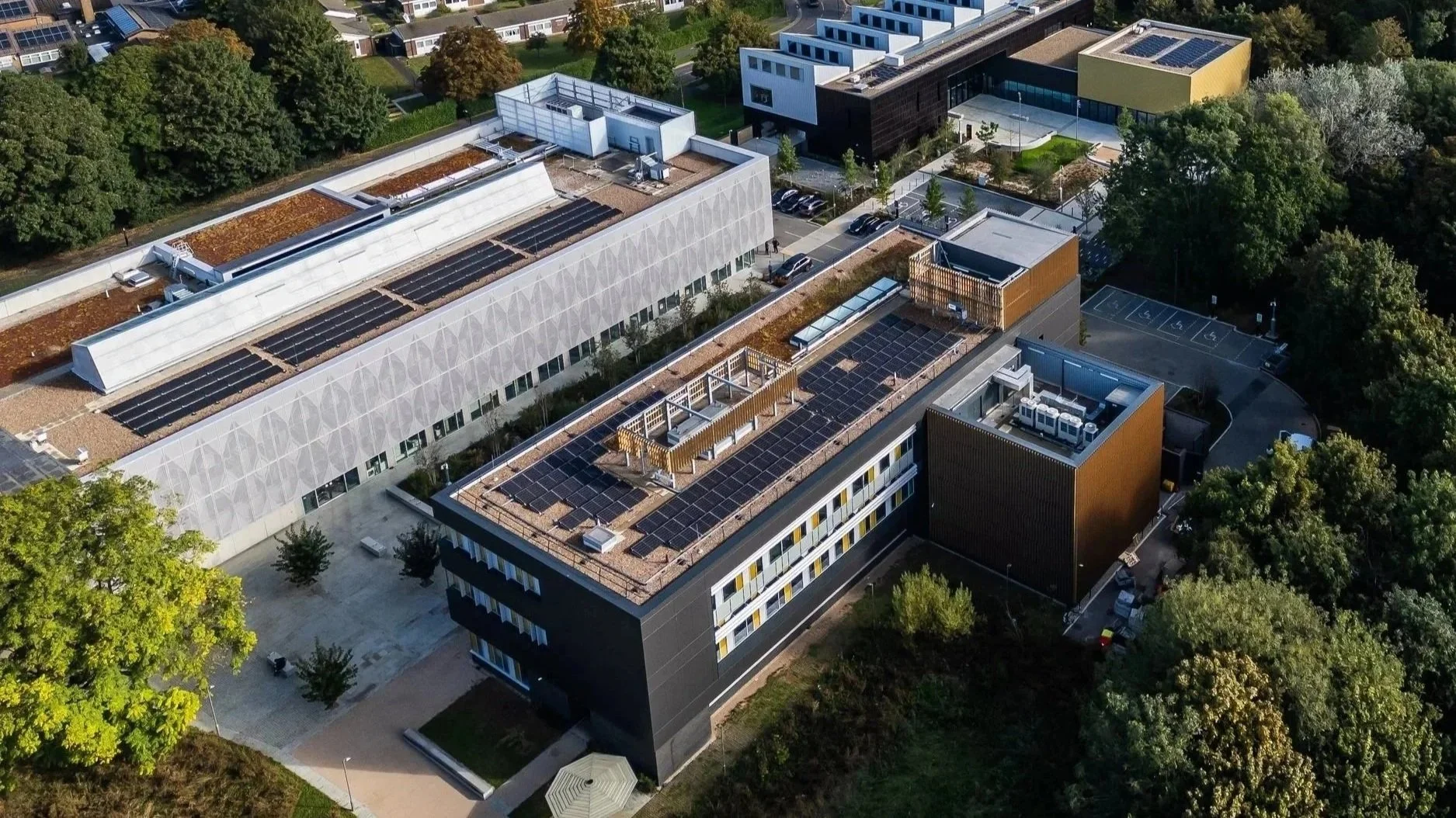
Services Provided: MEP | Sustainability
Project Value: £30m
Climate credentials: EPC – B | BREEAM Very Good | Carbon Emissions – 18.5 kgCO2/m2.annum
Services Provided: MEP | Sustainability
Project Value: £30m
Climate credentials: EPC – B | BREEAM Very Good | Carbon Emissions – 18.5 kgCO2/m2.annum
Phase 3 // The Lab
A collaboration between ARU, Peterborough City Council, and the Cambridgeshire and Peterborough Combined Authority set out to deliver a new laboratory building that would expand the University’s curriculum, act as a cultural hub, and drive local growth and investment.
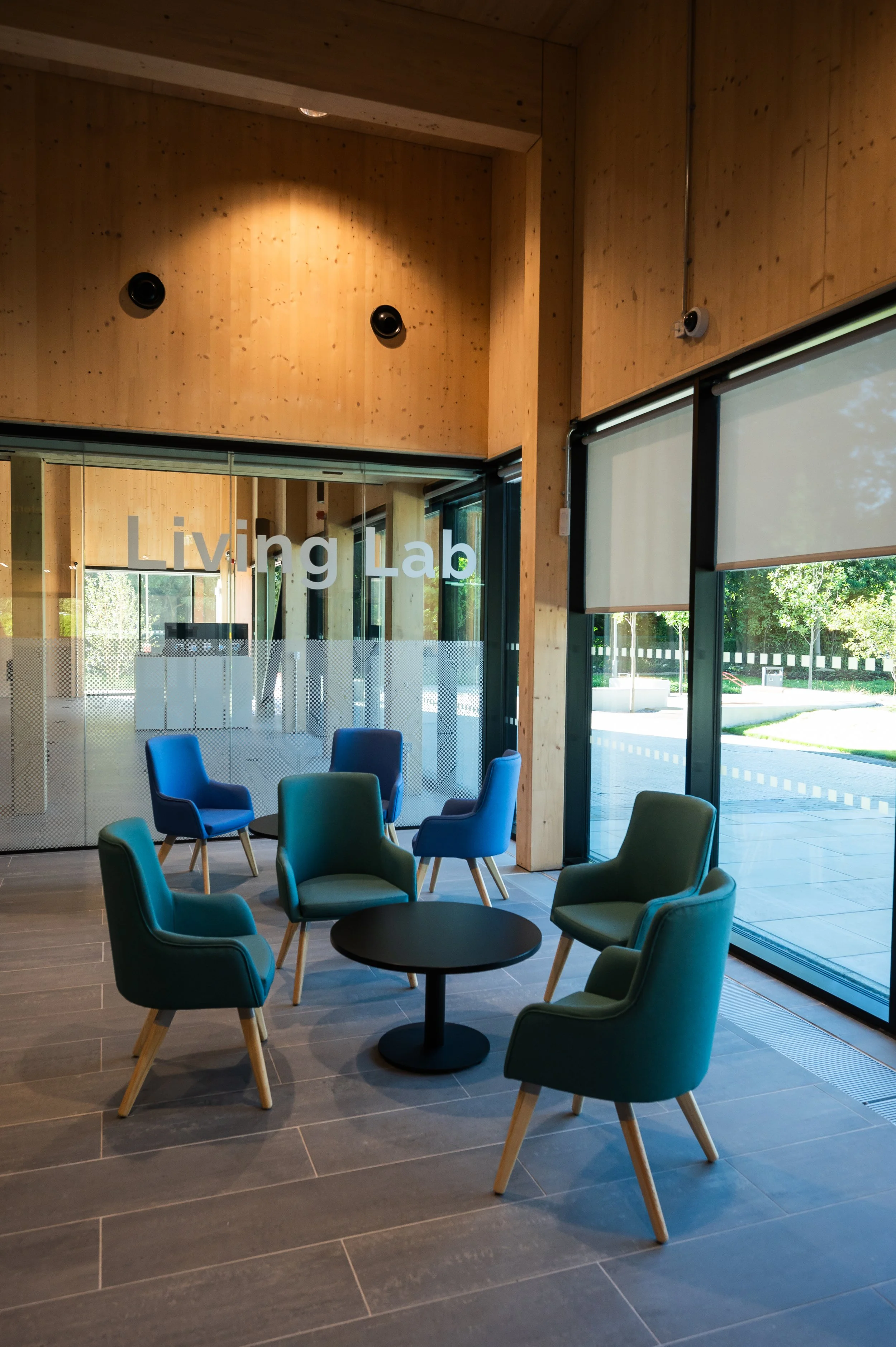
Developed on the site of the former Regional Pool car park, the scheme now provides specialist facilities including a microbiology lab, tissue culture lab, a variety of engineering workshops, flexible teaching spaces, and the Living Lab - a dedicated area designed for public engagement. The Living Lab will partner with local libraries, museums, and arts centres to showcase exhibits and host events, inspiring the wider community to explore STEM subjects.
During construction, the project also featured a unique Knowledge Quad, complete with a viewing tower and interactive space, enabling students, staff, and the public to engage directly with the project’s progress and learn more about the construction process.
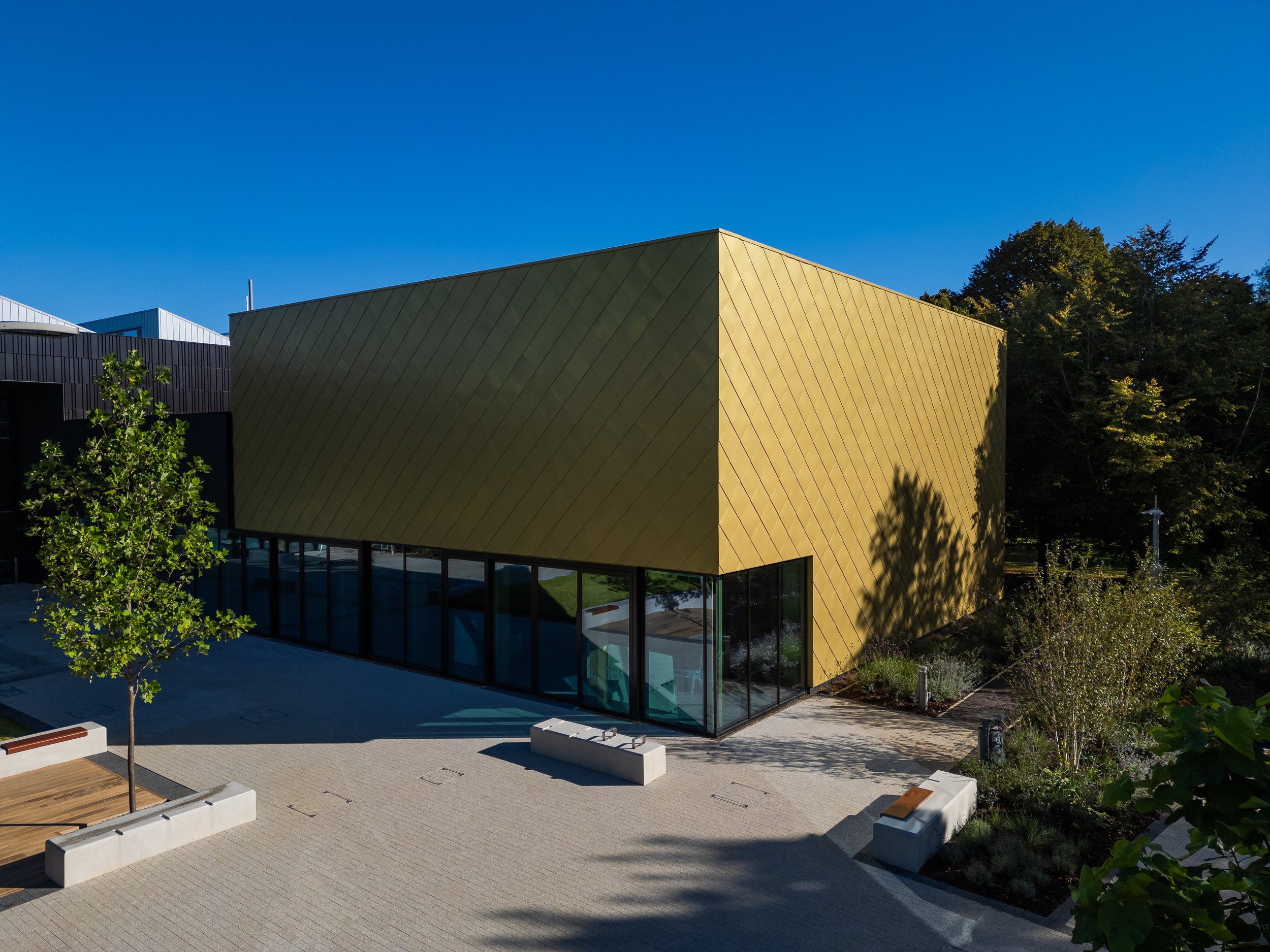
CPW were brought on board to lead the MEP design for the two-storey 2500m2 BREEAM Excellent building. Labs are notoriously high energy consumers with specialist equipment and environment demands, and so require specialist MEP interventions to ensure fume cupboards, ventilation and humidity are carefully managed, effective and efficient. Our team recommended the use of air source heat pumps to provide a cleaner source of energy to the building. Alongside this, solar panels were added to the roof to further generate a renewable electricity source.
As the first category two lab in Peterborough, this serves as a great opportunity to collaborate with industry, opening up new opportunities in the region.
The building uses an all-timber clad frame. Timber is one of the most environmentally friendly building material options, as it has relatively low energy consumption and CO2 emissions when compared to steel and concrete. The Cross Laminated Timber (CLT) and Glulam elements were left exposed where possible to reduce the need for additional finishes. Extensive collaboration with all project partners was required to ensure a robust fire safety strategy and a thorough moisture control strategy.
The sawtooth roof was designed to flood the upper classrooms with daylight, minimising artificial lighting requirements and providing passive ventilation. These passive design techniques help to reduce the energy consumption of the building. The roof design also contributes to the moisture control of the timber frame by encouraging water run-off.
Want to find out how we could support your decarbonisation journey? Visit our services page.