

A building can achieve Part L compliance yet still consume significantly more energy than expected once occupied. This discrepancy, known as the performance gap, is becoming an increasingly important challenge for project teams and occupiers as operational energy comes under greater scrutiny. So, how can project teams move beyond compliance and gain a more accurate picture of real-world performance? We spoke with our Associate Director, Jayesh Patel, about CIBSE TM54 assessments and the role they can play.
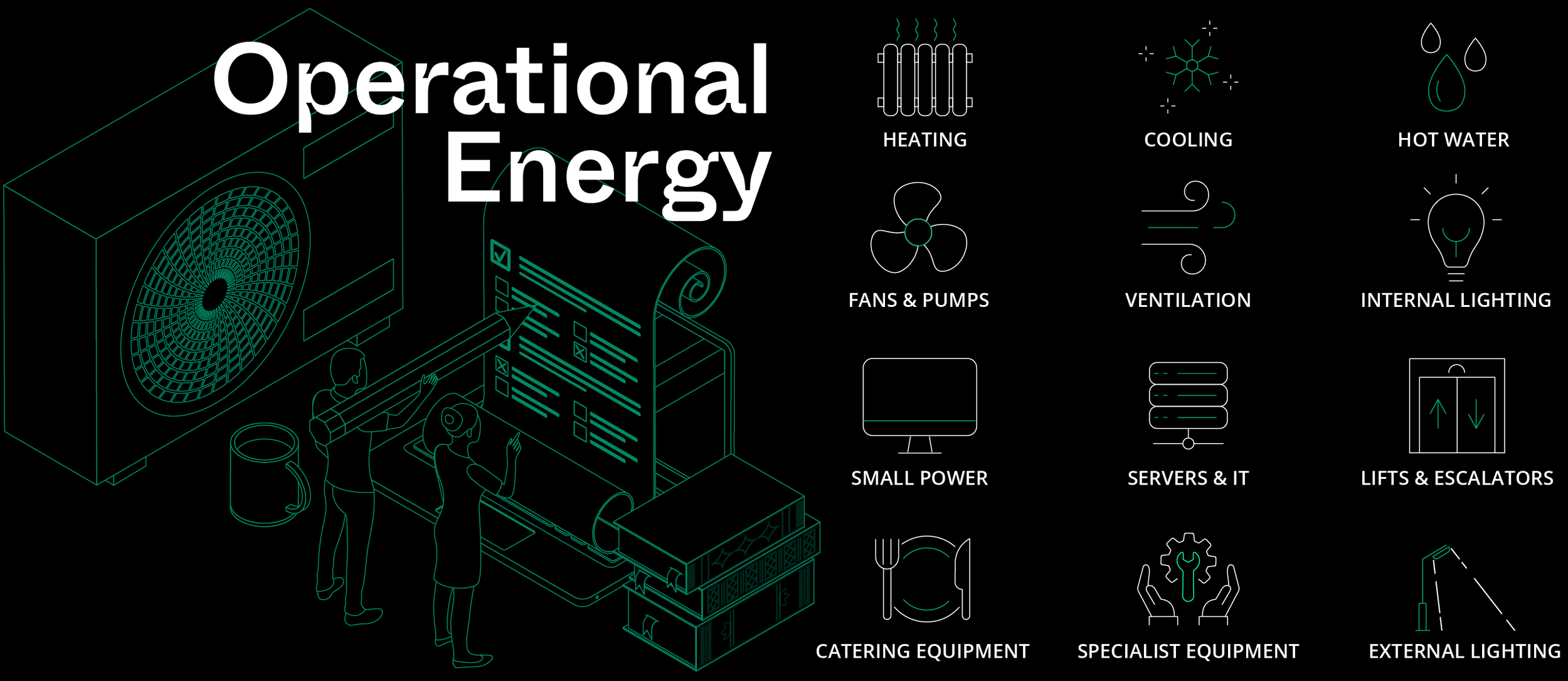
Part L is a section of the Building Regulations in England that governs the conservation of fuel and power in both new and existing buildings. Its aim is to ensure buildings are designed and constructed to reduce energy demand, improve thermal performance and limit carbon emissions. It assesses standardised, regulated loads, such as heating, cooling, ventilation, lighting and domestic hot water (DHW) and compliance is mandatory for all building works.
Part L plays an important role in improving the energy efficiency of buildings and reducing carbon emissions across the built environment. By setting minimum performance standards, it helps ensure that new developments and refurbishments are designed with sustainability in mind. However, while compliance is essential, it does not always reflect how a building will perform in operation, leading to the performance gap.
This is largely because Part L assessments are based on standardised assumptions designed to provide a consistent benchmark for regulatory compliance. While this allows buildings to be assessed fairly across the board, it does not account for many factors that influence actual energy consumption, including occupancy patterns, small power loads and other unregulated energy uses. In some cases, this can also encourage a ‘design for compliance’ approach, where meeting regulatory compliance takes precedence over optimising long-term building performance.
“Part L calculations are essential for demonstrating regulatory compliance, but they are not intended to predict a building’s total operational energy consumption. A building can therefore achieve compliance while consuming more energy than anticipated once occupied.”
CIBSE TM54 assessments are designed to reduce the performance gap by predicting operational energy use by considering both regulated and unregulated loads, enabling scenario modelling and risk analysis. “This provides a more representative estimate of whole-building performance and identifies the assumptions and risks most likely to affect the outcome,” says Jayesh.
For project teams, TM54 assessments can support informed decision-making by testing different design strategies before construction. This may include assessing building services options, occupancy patterns, operating hours and renewable technologies to understand their impact on energy performance. By identifying risks early, teams can make better-informed design decisions and avoid costly changes later in the project lifecycle.
These principles are increasingly being applied across both new-build and retrofit projects as teams seek a better understanding of likely operational energy performance. CPW has supported this approach on projects such as the Roger Stevens Building at the University of Leeds, where TM54 modelling was used to better understand future operational energy demands and inform future retrofit decisions for the 1970s Brutalist structure.
Early engagement with TM54 assessments at RIBA Stage 2 or 3, is recommended, as it allows the findings to be incorporated throughout the design process. “Early engagement makes operational energy part of the design process and aligns the BREEAM strategy with the wider project brief,” adds Jayesh. It also reduces the likelihood of costly redesigns later in the process.
Operational energy is becoming an important consideration in the built environment and sustainability certifications, such as BREEAM Refurbishment and Fit Out (RFO) Version 7. Released in 2026, the updated version places a significantly larger emphasis on operational energy, making up a quarter of the credits available in the energy section. This reflects a wider industry shift towards demonstrating measurable operational outcomes. As a result, understanding how a building is likely to perform in use is becoming increasingly important for project teams pursuing sustainability certifications.
However, predicting energy performance is only part of the picture. Once a building is occupied, performance must be measured and verified to ensure outcomes align with design expectations. This is where NABERS UK plays an important role. While TM54 assessments tackle the performance gap in a building’s design, NABERS UK addresses it when a building is operational. Using a full year of actual metered data, NABERS measures how a building is performing in operation, helping occupiers, owners and investors identify opportunities for improvement and make informed decisions.
As the industry places greater emphasis on operational energy and measurable outcomes, compliance alone is no longer the full picture. Part L, TM54 and NABERS UK each play a vital role in helping project teams move from regulatory compliance towards genuine building performance. Together, they provide a framework for designing, predicting and verifying buildings throughout their lifecycle.
Looking to bridge the performance gap on your next project? Get in touch with our team of specialists to discuss how we can support your project.