
CPW supports net zero ambitions at University of Derby’s Cavendish Building
We’re proud to have supported the University of Derby on the delivery of its new Cavendish Building, a milestone development in sustainability that demonstrates how higher education estates can take meaningful, credible action towards net zero construction.
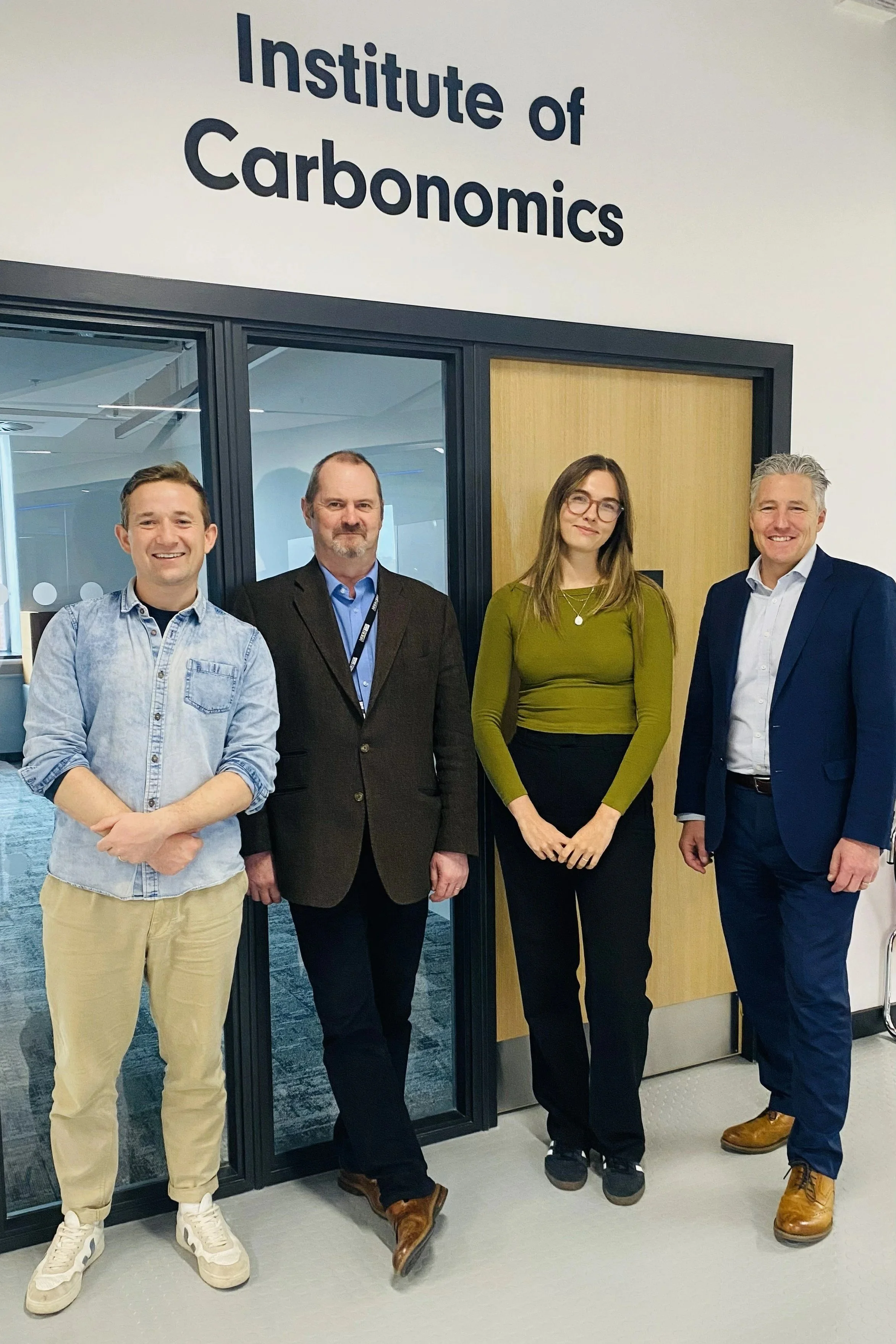
Working in collaboration with the University of Derby and Ecologi, CPW acted as carbon advisor on the project, supporting the team to measure, reduce and responsibly address embodied carbon in line with the UK Green Building Council (UKGBC) framework for Net Zero Carbon – Construction. The Cavendish Building now stands as a strong example of how science-led carbon management can be embedded into major construction projects from the outset.
Our involvement focused exclusively on carbon, with our Principal Sustainability Consultant, Jaime Oliver, acting as an independent carbon advisor and auditor. The role included guiding the project team through the complexities of the embodied carbon assessment and ensuring that the University’s net zero ambitions were being delivered in a credible way, providing long-lasting results.
This included monitoring embodied carbon performance throughout the design and construction phases, advising on opportunities to reduce carbon through material selection and construction practices, and tracking progress against UKGBC guidance. Jaime also supported the development of a transparent and verifiable offsetting strategy, working closely with Ecologi to ensure alignment with recognised best practice.
We helped coordinate discussions around both carbon offsetting and the project’s transition fund, enabling the University to invest not only in verified carbon avoidance and removal projects, but also in nature-based projects in Derbyshire.
Putting carbon first, from day one
A key factor in the success of the Cavendish Building was the early commitment to carbon reduction. By applying an internal carbon price at the very start of the project, the University created a clear incentive to minimise embodied emissions before considering offsetting.
This approach encouraged innovation across the design and construction team, with a particular focus on reducing the carbon impact of materials and structural elements, which typically account for a significant proportion of a building’s embodied footprint. Through careful design choices and construction methods, the project team was able to substantially reduce emissions before addressing the remaining residual carbon in a transparent and responsible way.

“My role was to monitor how the project was performing in terms of embodied carbon across both the design and construction stages, and to highlight where reductions could be made,” Jaime explains. “That often came down to material selection, but also to construction practices and logistics.”
Balancing sustainability with architectural ambition, programme and cost was not without its challenges.
“The Cavendish Building is a striking project in terms of its scale and appearance, both internally and externally,” Jaime says. “Designing a building of that calibre while maintaining a strong focus on embodied carbon was challenging, but also incredibly rewarding. The design and project teams consistently kept sustainability high on the agenda, which made a huge difference.”
Credibility through recognised frameworks
For CPW and the University of Derby, credibility and transparency were fundamental to the project’s net zero claims. To ensure this, the team aligned the carbon strategy with the UKGBC’s definition of Net Zero Carbon – Construction.
“Using a recognised framework was essential,” Jaime notes. “It gives confidence to everyone involved, and to those looking at the project from the outside, that the approach is robust, measured and verifiable. The UKGBC framework sets clear expectations around reporting, performance benchmarks and offsetting, which helped keep the project honest and accountable.”
Alongside verified carbon avoidance and removal projects, the transition fund enabled investment in peatland restoration in Derbyshire, supporting regional environmental resilience while contributing to wider climate goals.
The Cavendish Building forms part of the University of Derby’s wider sustainability strategy and reflects its ambition to embed environmental responsibility into the fabric of the campus itself – not just through policy or teaching, but through the buildings where students learn and collaborate. By prioritising carbon reduction first, applying a robust framework, and taking a transparent approach to residual emissions, the project sets a strong example for how universities can lead by example in the transition to a net zero built environment.
CPW is proud to have supported the University of Derby on this journey and to have played a role in ensuring the project’s carbon ambitions were delivered with integrity.
The UK Net Zero Carbon Buildings Standard (UK NZCBS) is the latest industry-wide standard for defining and verifying net zero carbon buildings. The UKGBC's 2019 Framework Definition provided the initial industry consensus, which paved the way for the more robust, science-led UK NZCBS. The UKGBC was a key instigator and contributor to the new standard.
If you’re exploring how to embed credible net zero and embodied carbon strategies into your next project, our Sustainability team would be happy to help. Learn more.